 Top statistics
The far north
Utsjoki and Kilpisjärvi
- FMI share
- About 75 %
- Utsjoki polar night
- Almost two months
- Suits
- Independent travel
Guides
Language
EnglishCurrency
US dollar · $GetYourGuide shows prices in the currency you choose.
Guide · Where and how often
The northern lights in Finland come down to latitude, darkness and cloud. Here is how often they show from Helsinki to Kilpisjärvi, and what a clear night around Saariselkä really offers.
Editorial team, saariselkanorthernlights.comUpdated October 19, 2026Reading time about 8 minutes53 sources
The short version
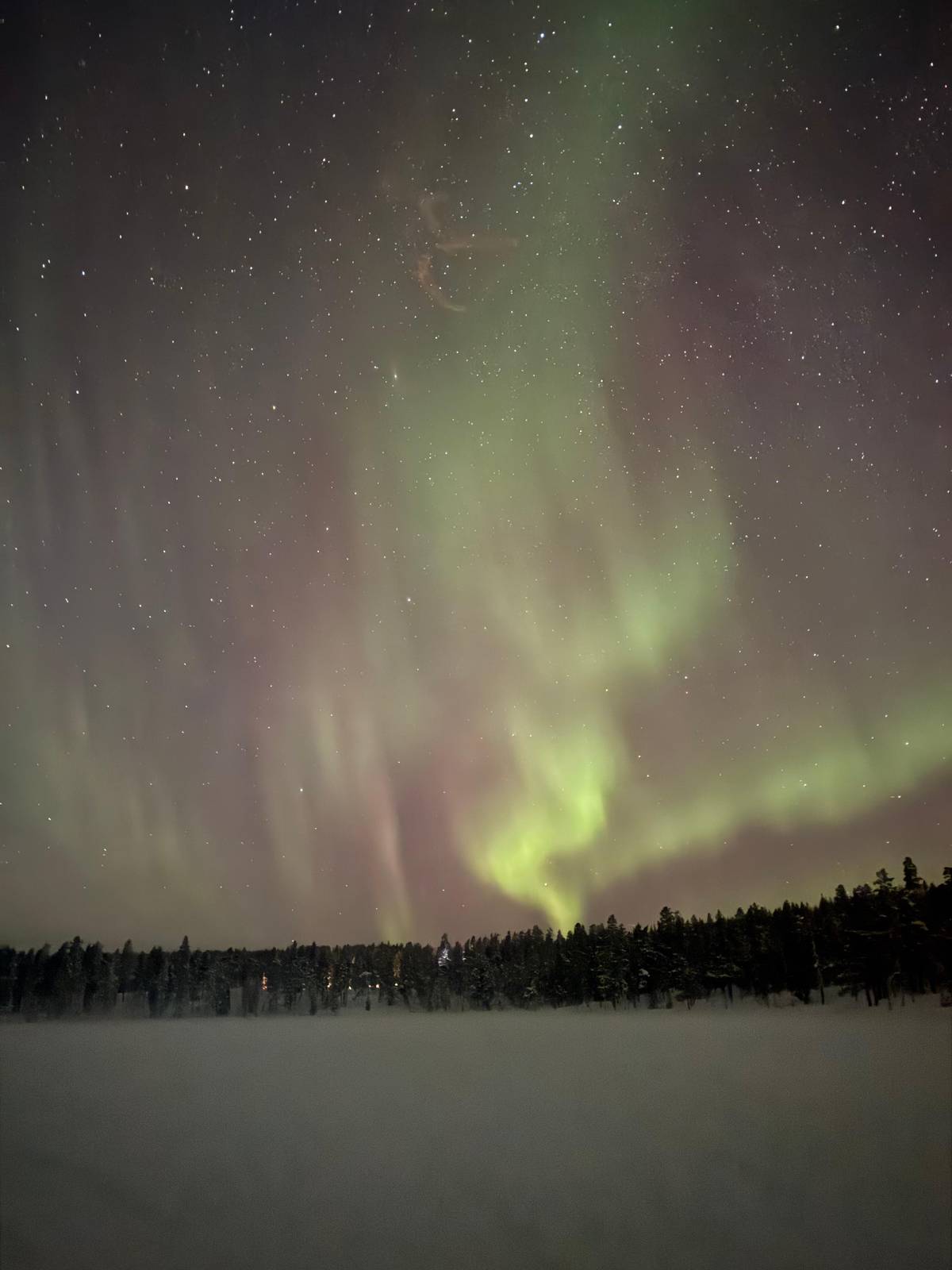
Can you see the northern lights in Finland? Yes, and from much more of the country than a first-time visitor tends to guess. The Finnish Meteorological Institute calls Finland one of the best inhabited regions in the world for watching auroras.6 The word inhabited matters here: you can watch from a village with heated rooms, plowed roads and an airport, not only from a remote research hut on a frozen hill.
The auroras gather in a ring around the magnetic pole, and Finland lies on the southern rim of that ring. FMI says the odds are best in the northernmost part of the country, in Lapland.1 NOAA describes the prime zone as an oval between about 60 and 75 degrees of latitude, where the lights can be seen on more than half of the nights of a given year.7 Saariselkä sits well inside that band, far above the Arctic Circle.
None of this promises a show every evening. The lights need darkness, a clear patch of sky and some activity in space at the same moment, and the first two depend on the season and the weather rather than on where you stand. What latitude changes is frequency: on a clear, dark night your odds improve as you travel north, and the official figures below show how steeply they climb.
From space to sky
In space
Accelerated electrons follow Earth's magnetic field down toward the polar regions.8
Upper air
They strike oxygen and nitrogen atoms and molecules high in the atmosphere.8
High above you
NOAA places the aurora typically 80 to 500 km above the surface.9
Main curtain
Excited atomic oxygen gives the common green at 557.7 nm.10
Top edge
Red from oxygen is restricted to altitudes above 300 km.11
Lower border
Molecular nitrogen can paint a purplish lower border.12
The Finnish Meteorological Institute publishes a simple ladder of odds for a dark and cloudless night. On the south coast, in places such as Helsinki and Turku, auroras appear about once a month on average.4 Visit Finland gives southern Finland around 10 to 20 nights per year.13 Both describe the same reality: a sighting in the south is a lucky evening to remember, not something to build a holiday around.
Move north and the northern lights in Lapland, Finland become a different proposition. FMI puts Lapland, naming the ski resorts Ylläs, Levi and Saariselkä, at roughly 50 % of dark, cloudless nights.2 Visit Finland describes the region as seeing auroras on roughly every other clear night between August and April.13 Different sources and different ways of counting arrive at the same message: on a clear night in the fells, a show is close to a coin toss.
At the top of the country the odds climb again. FMI gives Kilpisjärvi, at the end of the long northwest arm, about 75 % of dark, cloudless nights.3 Its Finnish statistics page says that in the northernmost parts of Lapland, Utsjoki among them, the lights flare on three nights out of four.14 Saariselkä sits further south than both, on the road that leads to the Arctic Sea, inside the band FMI counts at about half of clear nights.152
Region by region
| Place | How often | Counted as | Source |
|---|---|---|---|
| Helsinki, Turku | About once a month | Dark, cloudless nights | FMI |
| Southern Finland | 10 to 20 nights a year | Nights per year | Visit Finland |
| Lapland ski resorts | Roughly 50 % | Dark, cloudless nights | FMI |
| Lapland | Every other clear night | Clear nights, Aug to Apr | Visit Finland |
| Northern Finland | About 200 nights a year | Nights per year | Visit Finland |
| Kilpisjärvi | About 75 % | Dark, cloudless nights | FMI |
| Utsjoki area | Three nights out of four | Nights | FMI |
Each source counts in its own way; the figures are shown as published, never merged.413216314
Three kinds of base
Top statisticsUtsjoki and Kilpisjärvi
 Booked here
Fells and Urho Kekkonen park
 City base
On the Arctic Circle
Decision helper
Match your priority to a region
The south coast averages about one night a month.4
Finland is on the southern rim of the auroral oval. The probability for seeing auroras is best in the northernmost part of the country, i.e. in Lapland.
Every one of those percentages describes a dark and cloudless night. Visit Finland is blunt about everything else: clouds are the most common reason people miss the northern lights entirely.5 The Finnish Meteorological Institute adds that the auroras are in the sky whatever the frost, but a dense cloud cover hides them from anyone on the ground.22 A bitterly cold night is not a bad night; a grey one is.
Cloud over Lapland is often patchy, drifting over some fells and lakes while leaving others clear, and a gap in the sky may sit a long drive away while your own village stays grey. Guided hunts that move with the weather exist for exactly that situation. The minivan hunt booked on this site is one of them: its guide plans the evening and drives to locations chosen for clear skies, with pickup in the Saariselkä area included.
The season changes the cloud picture as well. FMI notes that spring is on average a less cloudy time, which makes March a recommended month for waiting for auroras.23 The same institute, taking the weather into account, names March and early April as the best time for auroras in Northern Finland.24 If your dates are flexible, the end of winter tilts the odds a little further in your favor, with long nights still to come.
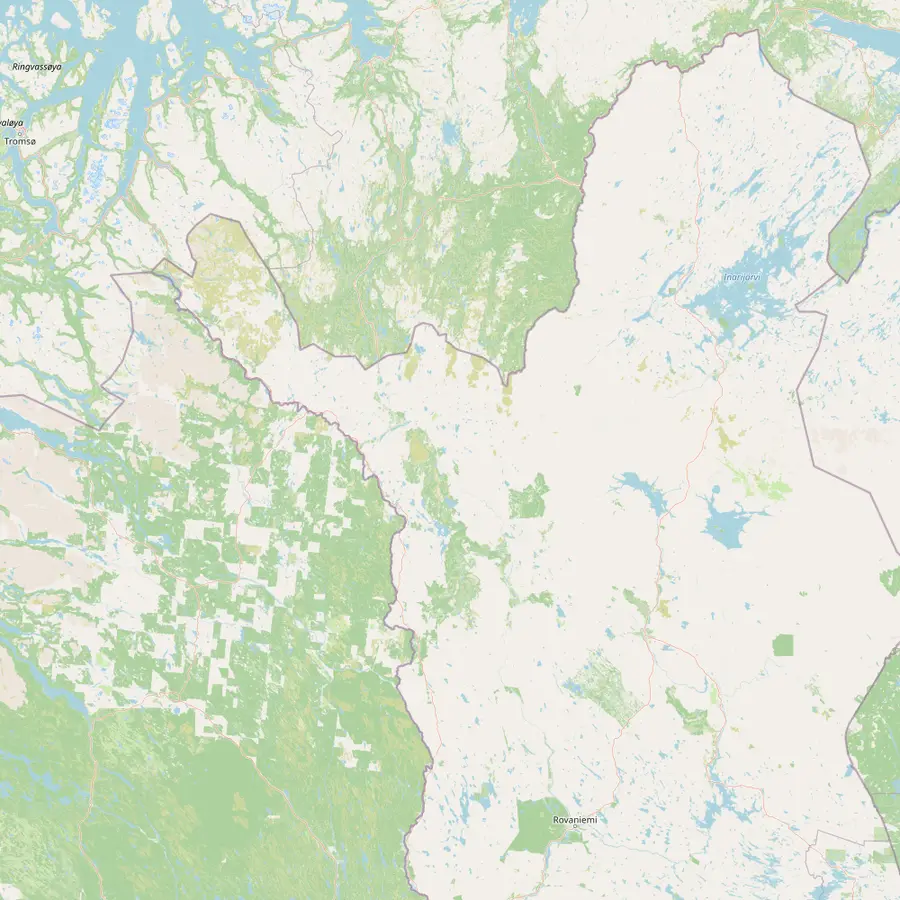
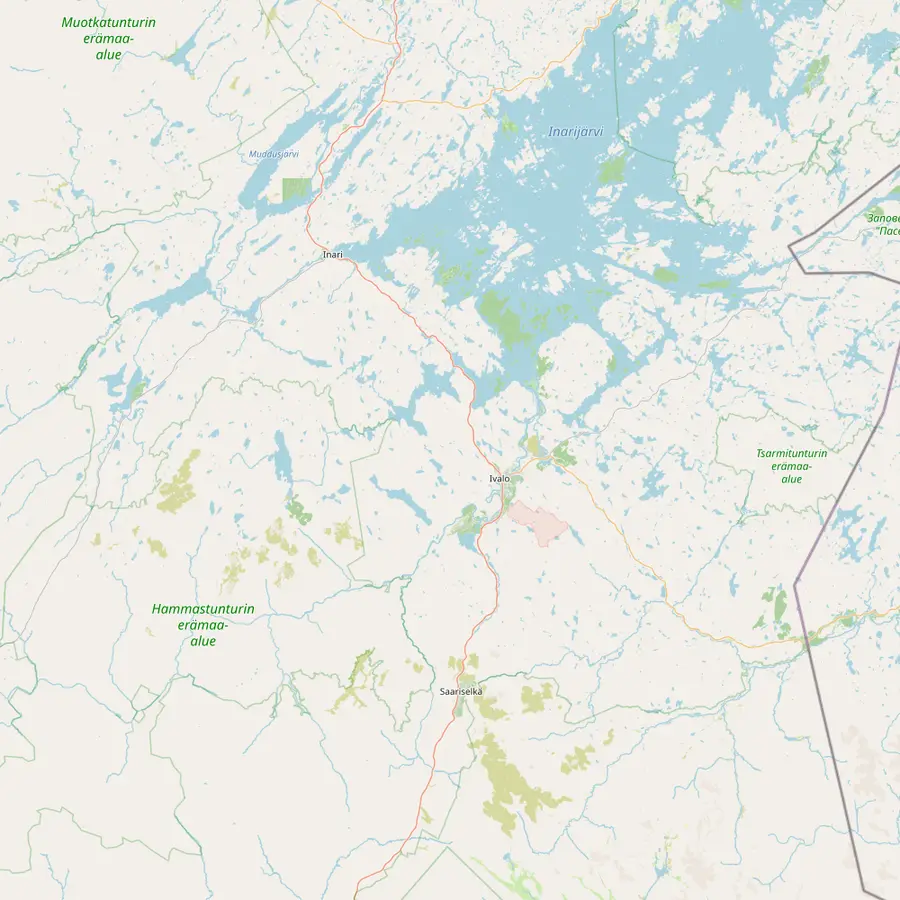
Map
Saariselkä next to the other aurora bases of Finnish Lapland, then a closer look at the fells, the airport and Lake Inari north of the village.
 1Saariselkä2Ivalo3Inari4Utsjoki5Kilpisjärvi6Levi7Rovaniemi
 8Kaunispää9Kiilopää10Kakslauttanen11Ivalo Airport2Ivalo3Inari12Lake Inari
FMI counts Saariselkä among the Lapland resorts where aurora shows on roughly 50 % of dark, cloudless nights.2
In Google Maps ↗Home of the northernmost airport in Finland and the EU.25 Some aurora hunts start from here.
In Google Maps ↗A village on Lake Inari, in a municipality where three Sámi languages are in official use.21
In Google Maps ↗On the northern border: FMI statistics give auroras on three nights out of four here, and the polar night lasts almost two months.1426
In Google Maps ↗FMI's highest figure for Finland: aurora on about 75 % of dark, cloudless nights.3
In Google Maps ↗About 170 km north of the Arctic Circle and 15 km from Kittilä Airport.2728
In Google Maps ↗On the Arctic Circle itself, with auroras from late August to the end of March or early April.1819
In Google Maps ↗Saariselkä's own fell, 438 metres, reached on foot, on skis, by car or by ski lift.29
In Google Maps ↗A 546-metre fell at a gate of Urho Kekkonen National Park.30
In Google Maps ↗The glass igloo resort, which places itself 250 km above the Arctic Circle.31
In Google Maps ↗Only 7 kilometres from Ivalo village, with daily flights.32
In Google Maps ↗Finland's third largest lake, with some 3,318 islands.20
In Google Maps ↗Checklist
Video
The player stays empty until you press play.
An aurora starts a long way from Lapland. Electrons accelerated in space follow Earth's magnetic field down toward the polar regions, where they collide with oxygen and nitrogen in the upper atmosphere.8 NOAA places the glow typically 80 to 500 km above the surface.9 The Sodankylä Geophysical Observatory, south of Saariselkä, works with auroral altitudes of approximately 90 to 130 km.33
The colors follow the gases. The most common is a pale green at a wavelength of 557.7 nm, produced by excited atomic oxygen.10 Red comes from oxygen as well, but only at altitudes above 300 km.11 A purplish lower edge, which you may notice along the bottom of a bright curtain, comes from molecular nitrogen.12 Visit Finland adds that pink and violet tend to appear during stronger activity, while red is rarer still.34
The Finns have their own story for the spectacle. FMI explains that the word revontulet comes from an old belief about a fire fox brushing the rocks and fell sides with its tail and striking sparks into the sky.35 The institute's own activity index is even called the R-index, the R standing for revontuli.36 It is a lovely word to learn before your first night out, and guides use it often.
Lapland North describes Saariselkä as an outdoor resort village ringed by open fells, forest and Urho Kekkonen National Park.37 The regional tourism body, Lapland North, describes its area as lying directly under the aurora oval, with frequent displays from early autumn until late winter.38 FMI's advice for any viewer is to find an unrestricted view at least toward the northern horizon, and a bare fell top or a frozen lake gives you exactly that.39
Local sources count the nights in their own way. Lapland North says the lights can be seen on average up to 200 nights a year, whenever the sky is dark and clear.40 Star Arctic Hotel, on the top of Kaunispää, says they can be seen on average every second night of the season at Saariselkä's latitude.4142 Neither figure promises you a particular night, and both tell the same story: the lights are common here and the weather is the variable.
Darkness is never the problem in season. Mid-December brings Saariselkä no sun at all, and mid-January only about 2.6 hours of it.43 By March the sun is up for about 11.5 hours, which still leaves long nights.43 Through June and most of July it does not set at all, and FMI notes that summer nights are too light for auroras.4344 Between those extremes, autumn and late winter pair long nights with enough daylight for everything else on your trip.
If the aurora is the main reason for your trip, a handful of questions decide your base: how far north it lies, how easily you reach it, and how far you can drive from it toward clear sky. Rovaniemi sits on the Arctic Circle itself, and Visit Rovaniemi gives its aurora months as late August until the end of March or the beginning of April.1819 Weather, not the map, will settle the rest.
Levi lies approximately 170 km north of the Arctic Circle and just 15 km from Kittilä Airport.2728 Saariselkä is further north again, only 25 km from Ivalo Airport, which Finavia calls the northernmost airport in Finland.1745 Kakslauttanen, next door, places itself 250 km above the Arctic Circle while Star Arctic Hotel says 270 km; the figures come from different hotels in the same corner of Lapland.3141
For the far north, Utsjoki and Kilpisjärvi top FMI's statistics, and both deserve a look if you can travel independently.314 A base that pairs good odds with a nearby airport and a choice of guided hunts is the simpler plan. Saariselkä offers that combination, and its own aurora hunt by minivan starts from $160 with pickup in the village area. Pickup areas and live prices for each date are on the booking page.
The time of night matters. FMI gives midnight, and a couple of hours before and after, as the typical time for displays.46 Visit Finland gives a window of 9pm to 2am, and NOAA puts the best aurora between 10 PM and 2 AM local time.4748 Treat these as a range rather than a timetable. Plan to be outside and away from bright lights across that whole stretch, not for a single hour, and keep a warm car or cabin within reach.
Your eyes need time as well. FMI recommends staying in the dark for about half an hour, since human night vision is not very good and needs to adapt.49 Phone screens and headlamps undo that work in seconds. A dim red light, gloves you can keep on while using your camera and a little patience all pay off far more than a fancy app on a cloudy night. Switch off the car lights and step away from the vehicle before you look up.
Finally, be ready for nights that start slowly. A faint grey-green arc low in the north can brighten and spread across the whole sky within minutes, and a quiet spell is no reason to head indoors. In Lapland, FMI notes, auroras are quite common always, even during solar minimum, and NASA and NOAA announced in October 2024 that the Sun had reached its solar maximum period.5051 Check the sky one more time before you go inside.
Plan your night
Claim a seat in the minivan now, pay nearer the night, and back out free until 24 hours before.
In the far north of Lapland. FMI gives Kilpisjärvi, at the end of the northwest arm, about 75 % of dark, cloudless nights.3
On roughly half of clear nights. FMI puts the Lapland ski resorts, Saariselkä included, at roughly 50 % of dark, cloudless nights.2
Only with luck. FMI says the south coast sees auroras about once a month on average on a dark, cloudless night.4
Late August to early April. That is Visit Finland's season; Lapland North gives September to April for its own area.5253
Around midnight. FMI names midnight, and a couple of hours before and after, as the typical time for displays.46
No, only a clear sky does. FMI says auroras are in the sky regardless of frost but cannot be seen through dense cloud.22
Sources
Keep reading