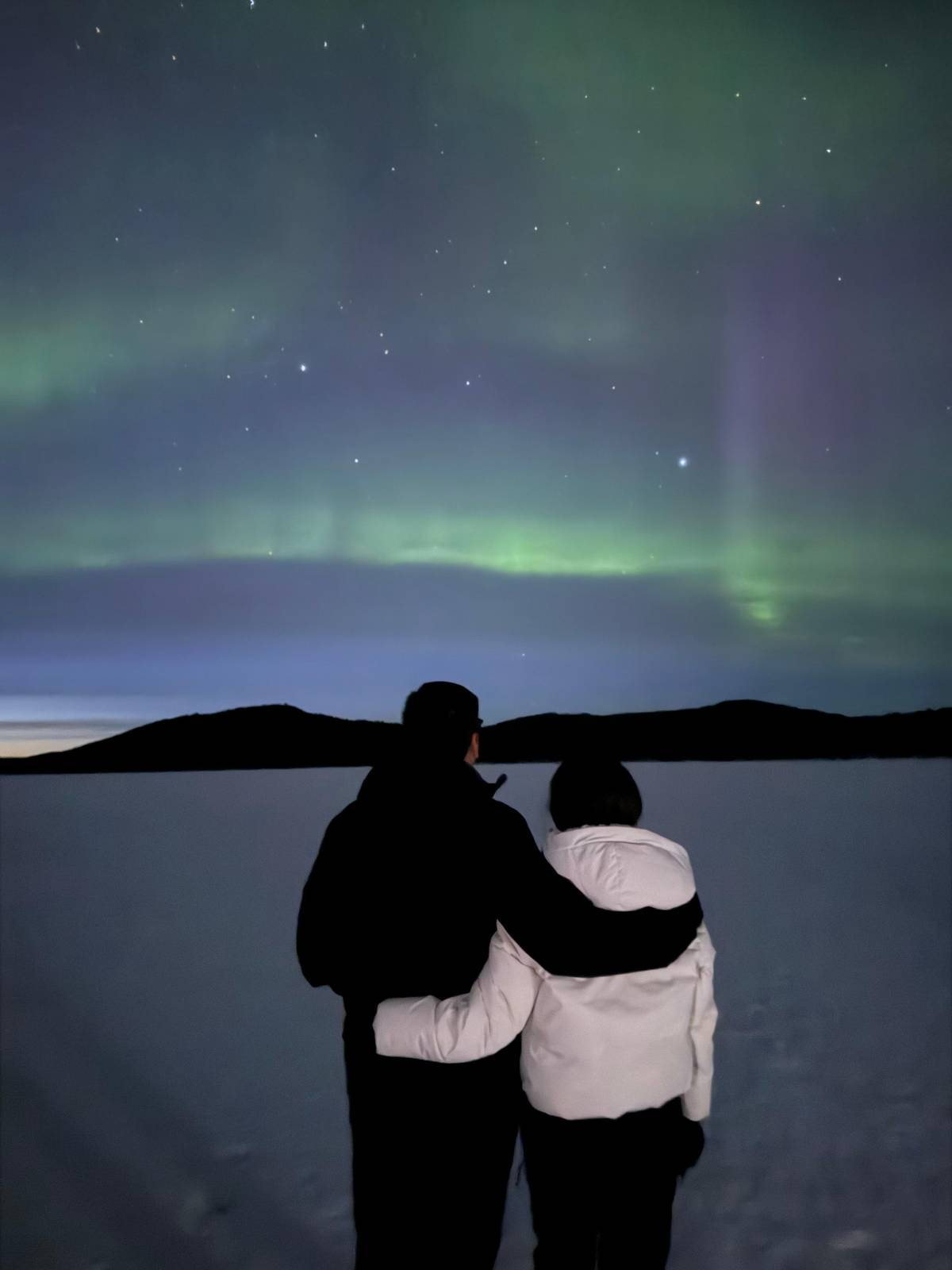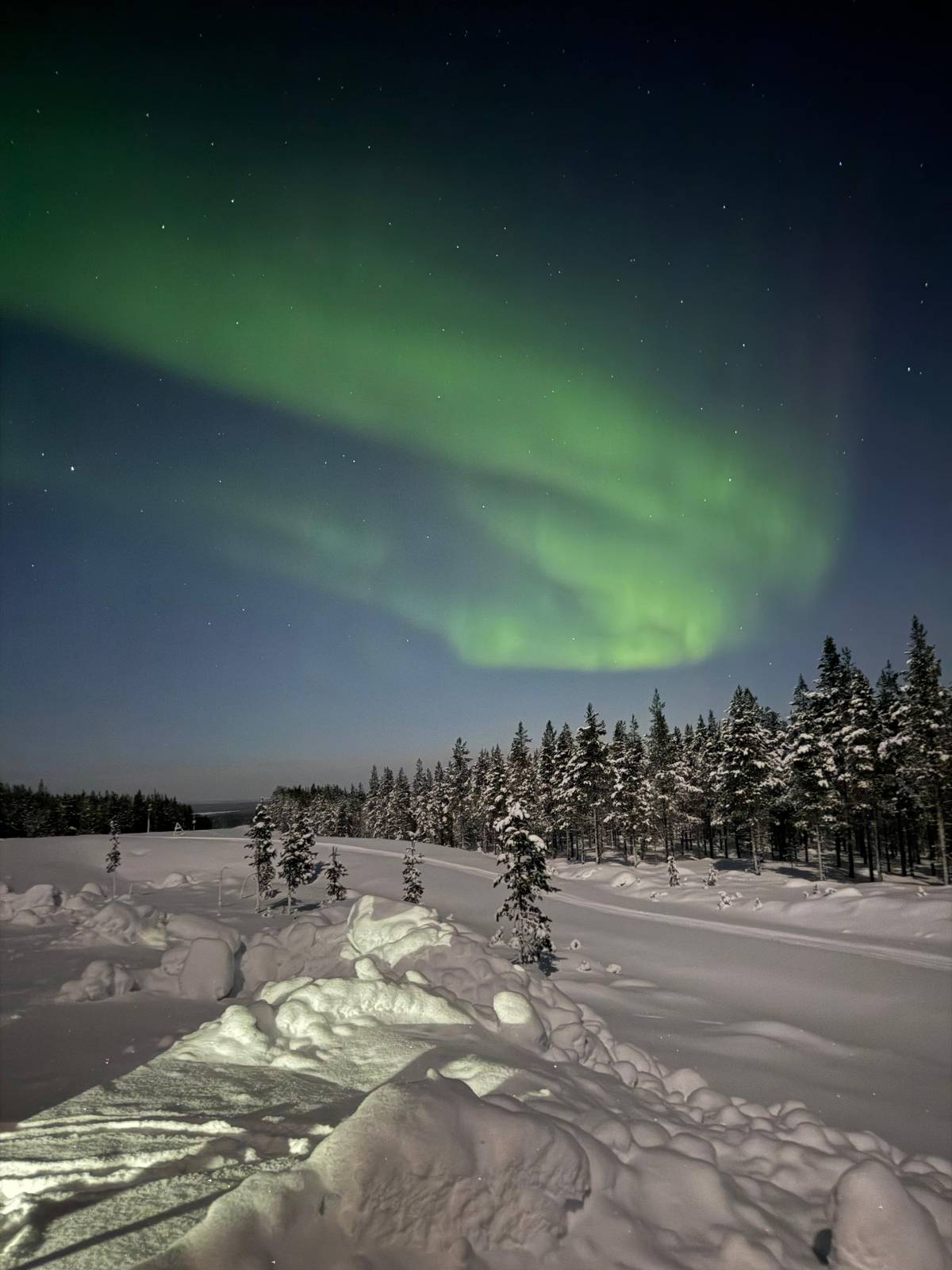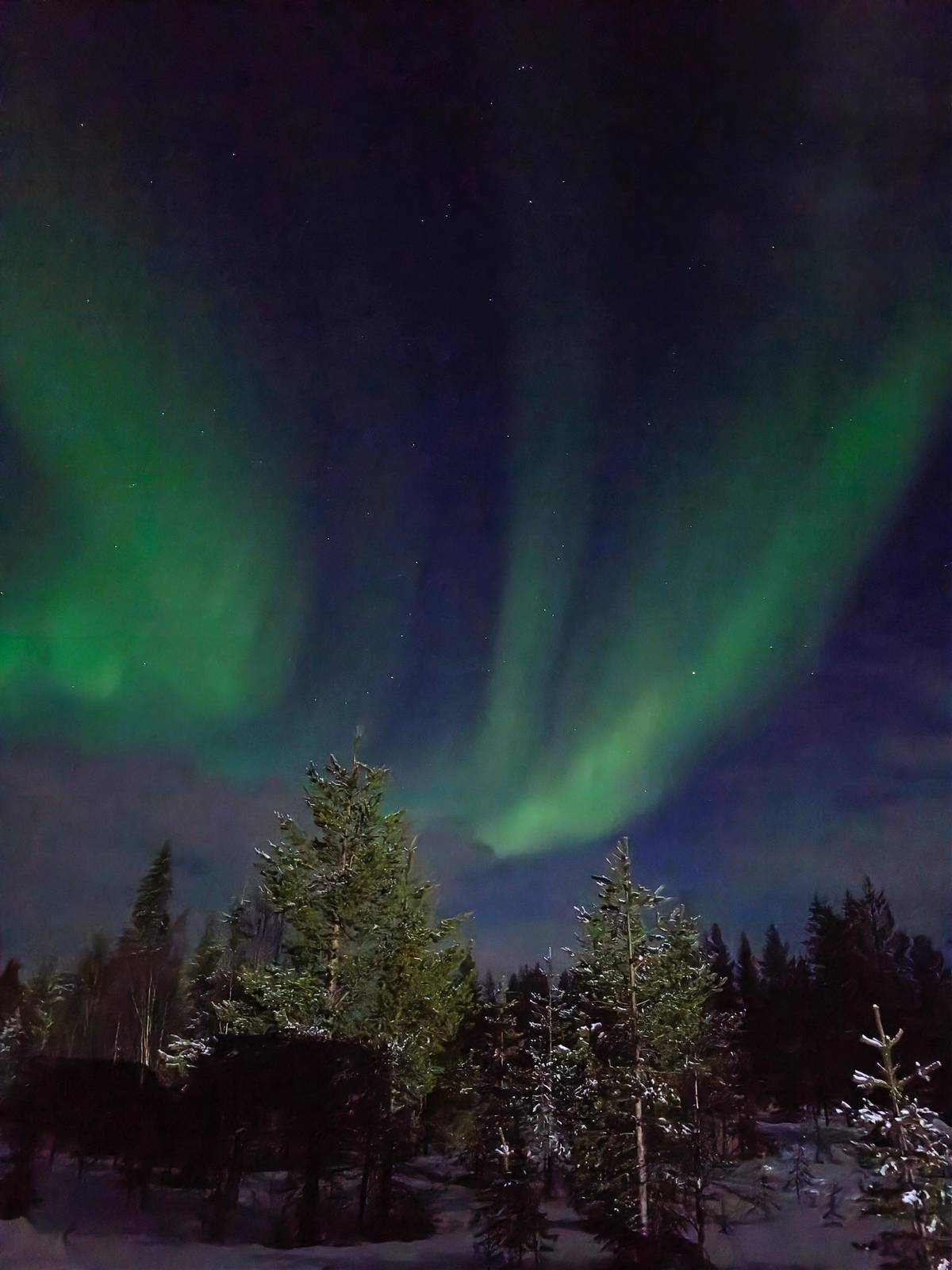
 Milder nights
Autumn
September and October
- Sun, mid-September
- 13.4 hrs
- Average low, October
- -3.6 °C
- Activity
- Equinox peak
Guides
Language
EnglishCurrency
US dollar · $GetYourGuide shows prices in the currency you choose.
Guide · Timing
Finland's aurora months run from late August to early April, and they are far from equal. Here is how darkness, cold, cloud and the equinoxes change your odds in Saariselkä, month by month.
Editorial team, saariselkanorthernlights.comUpdated October 19, 2026Reading time about 8 minutes21 sources
The short version
Finland's northern lights season is set by darkness before anything else. In summer the problem is the light, not the aurora: in Lapland the sun does not set at all around midsummer, and the nights are generally too light for seeing the lights.6 Once real darkness returns, the question becomes how many clear, dark hours you get, and how lively the sky is during them. Darkness, cloud and activity run through every month on this page.
Visit Finland puts the window between late August and early April, when nights are dark enough for the lights to show.1 Lapland North, the regional tourism board for Inari and Saariselkä, gives September to April instead.7 The gap between them is the ragged edge of the season. Mid-August still gives Saariselkä 17.8 hours of sun a day, which leaves only a short stretch of night to work with.3
Activity is uneven too. Visit Finland calls autumn and spring the most active periods, especially around the equinoxes.1 FMI explains that around the spring and autumn equinoxes the Earth sits in a position that lets solar wind energy pass into the magnetosphere more easily, and that magnetic storms therefore occur more often in autumn and spring than in summer and winter.8 The shoulders of the season carry an edge that the deep winter lacks.
Through the season
Late August
Visit Finland marks late August as the start of nights dark enough for the lights.1
September
FMI notes more magnetic storms in autumn and spring than in summer and winter.8
November
Only 5 hours of sun at mid-month in Saariselkä.3
December
No sunrise at mid-month in the long-term record.3
March
Less cloud on average, which makes March a recommended month.9
Early April
Visit Finland ends the aurora season in early April.1
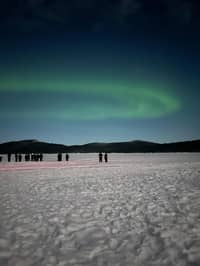
September brings the first proper dark evenings of the year. Saariselkä gets 13.4 hours of sun at mid-month and 10.6 hours without it, and average lows stay just above freezing at 2.5 °C.3 For anyone who dislikes deep cold, this is the gentlest way into the aurora months. An evening outside asks for a warm jacket, a hat rather than a full set of Arctic layers, and the fells still glow with autumn color by day.
October darkens quickly. By the middle of the month the sun is up for 9.5 hours, and average lows slip below zero to -3.6 °C.3 The long-term record also counts 7 days a month that bring 2.5 mm or more of rain or snow in October, as many as in September.3 Precipitation days are not the same thing as cloudy nights, but they give a feel for how unsettled a month tends to be, and autumn is rarely the calmest part of the year in the fells.
Autumn's other gift is activity. Around the autumn equinox, the favorable geometry that FMI describes is in place, and a clear night in late September or October can deliver lively displays.8 The catch is the weather. If you choose autumn, plan more than one evening, keep your days loose, and decide on the night itself rather than weeks ahead. A clear gap between weather fronts is often all you need.
Darkness and precipitation
Month by month
| Month | Daylight (h) | Darkness (h) | High / low | Wet days | Aurora |
|---|---|---|---|---|---|
| Jan | 2.6 | 21.4 | -8 / -16 °C | 5 | Yes |
| Feb | 7.6 | 16.4 | -8 / -15 °C | 4 | Yes |
| Mar | 11.5 | 12.5 | -3 / -12 °C | 4 | Yes |
| Apr | 15.7 | 8.3 | 2 / -6 °C | 5 | Early April |
| May | 20.5 | 3.5 | 8 / 0 °C | 6 | No |
| Jun | 24 | 0 | 15 / 5 °C | 7 | No |
| Jul | 24 | 0 | 18 / 9 °C | 9 | No |
| Aug | 17.8 | 6.2 | 15 / 7 °C | 7 | Late August |
| Sep | 13.4 | 10.6 | 9 / 3 °C | 7 | Yes |
| Oct | 9.5 | 14.5 | 2 / -4 °C | 7 | Yes |
| Nov | 5 | 19 | -4 / -9 °C | 5 | Yes |
| Dec | 0 | 24 | -6 / -13 °C | 5 | Yes |
Saariselkä station normals, 1991 to 2020: hours of daylight at mid-month, average daily highs and lows, and days that bring 2.5 mm or more of precipitation.3 Season according to Visit Finland.1
Three windows
Milder nightsSeptember and October
 Most darkness
December and January
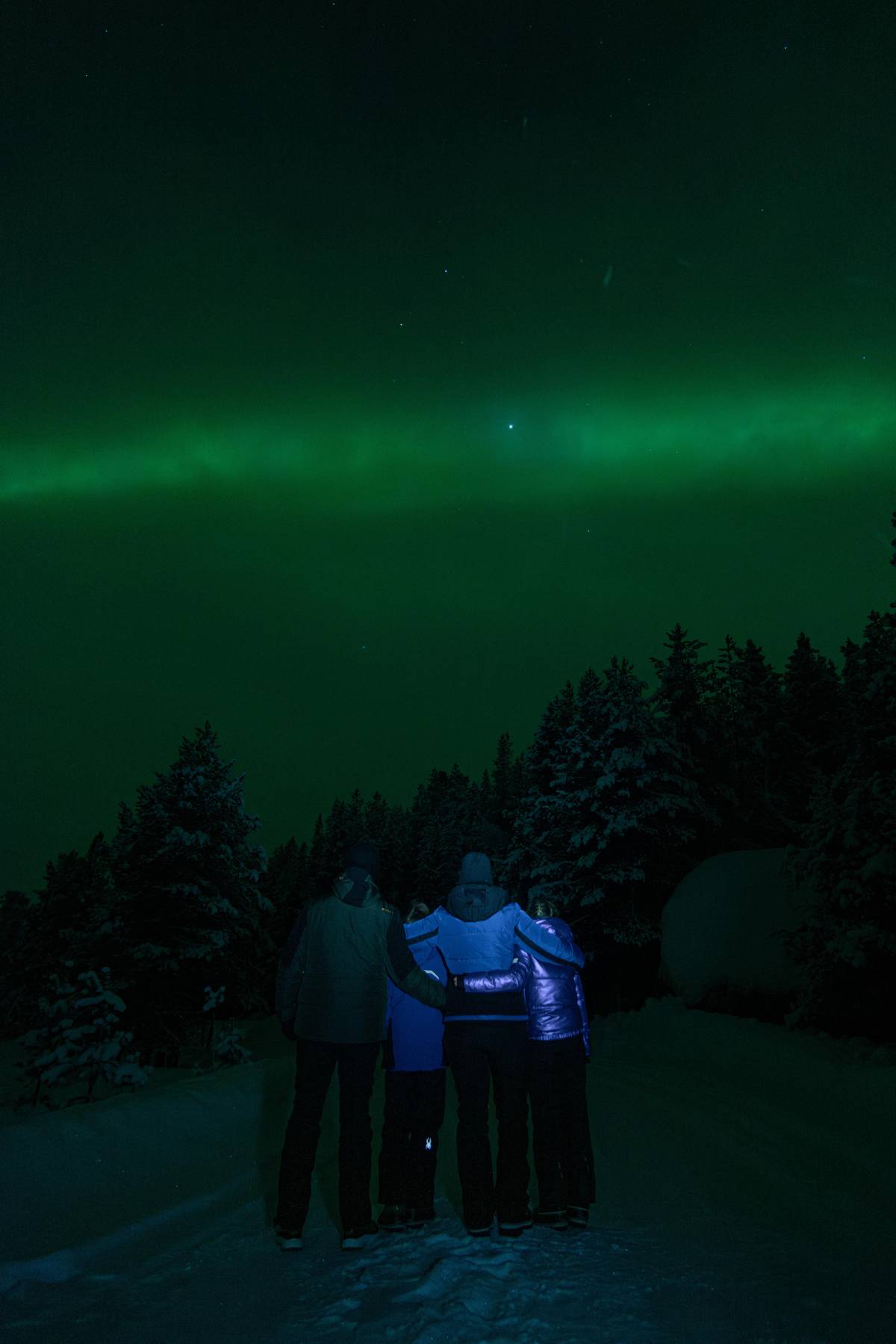 FMI's pick
March and early April
Decision helper
Find the row that fits your own aurora week
FMI names these weeks the best in Northern Finland once weather is counted in.2
Average lows in Saariselkä are 2.5 °C in September and -3.6 °C in October.3
Mid-December in Saariselkä brings no hours of sun at all.3
FMI says magnetic storms come more often in autumn and spring.8
Average lows sit at -15.6 °C and -15.3 °C: dress for real cold.3
Considering also the weather, the best time for seeing auroras in Northern Finland is in March and early April.
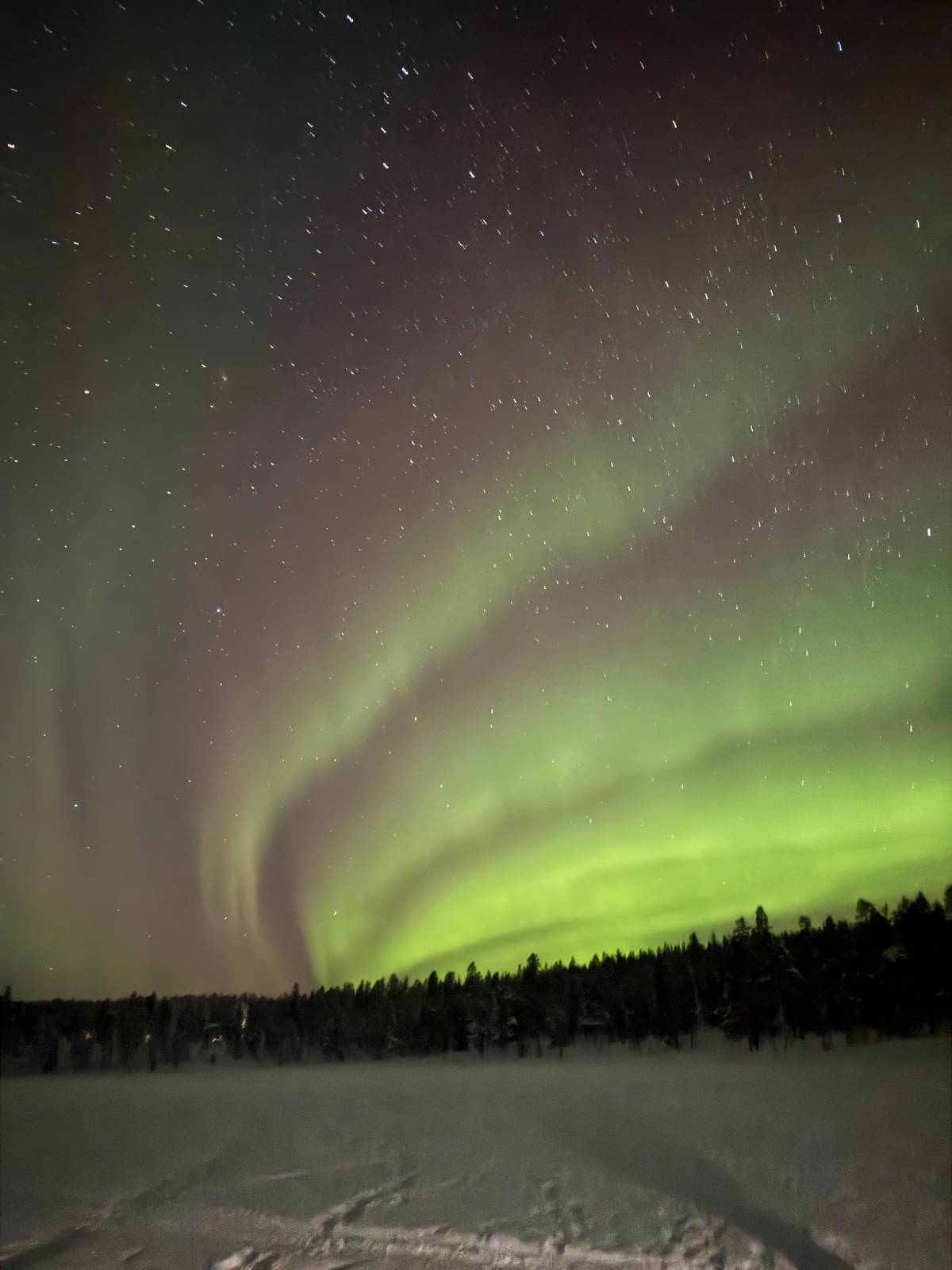
November is the month the light drains away. Mid-month brings just 5 hours of sun, and average lows fall to -9.5 °C.3 Evenings turn dark in the late afternoon, which stretches the time you can usefully spend outside. Every hour of darkness is an hour in which an aurora could appear, provided the sky stays open. Use those evenings well: the darkness is generous, even if the cold has teeth.
Then comes the polar night. The regional tourism board says December and January bring the polar night to Northern Lapland, and the long-term data for Saariselkä shows the sun above the horizon for 0 hours at mid-December.103 Seeing the northern lights in Lapland, Finland in December means darkness is never your limit. It is not total blackness either: Kakslauttanen, just south of the village, describes light from 10 in the morning to 15 in the afternoon during this period.11
January keeps the deep cold. Average highs sit at -8.3 °C and lows at -15.6 °C, with the sun back above the horizon for 2.6 hours a day by mid-month.3 Visit Finland gives -14 °C as the average winter temperature in Finnish Lapland, with occasional dips to -30 °C.12 A night out in these months is about clothing as much as timing. A tour that lends warm clothing makes long waits by a frozen lake far easier.
Checklist
Video
The player stays empty until you press play.
Light returns fast after the polar night. February already gives 7.6 hours of sun at mid-month and March 11.5 hours, while lows stay firmly cold at -15.3 °C and -11.7 °C.3 Nights are shorter than in December, but the darkness around midnight is still deep, and midnight is when FMI says displays are typical.4 You trade a few hours of night for bright, snowy days out on the open fells.
FMI gives a clear reason to look at spring. Taking the weather into account, it names March and early April as the best time for seeing auroras in Northern Finland.2 Its Finnish-language guide adds that spring is on average a less cloudy time, which makes March a recommended month for waiting for the lights.9 Put that next to the higher activity around the spring equinox, and the case for March becomes hard to ignore.8
The season closes in early April. Visit Finland ends its window there, and by mid-April Saariselkä has 15.7 hours of sun a day.13 If you want the last of the dark with milder days and long ski afternoons, the first days of April can still work. Later than that, the nights grow too short, and the sky above the fells stays pale even in the middle of the night.
Within any month, the clock matters as much as the calendar. FMI gives midnight, and a couple of hours before and after, as the typical time for auroral displays.4 Visit Finland widens that to between 9pm and 2am, and NOAA to between 10 PM and 2 AM local time.1314 The overlap, from late evening into the small hours, is the stretch worth protecting from long dinners, saunas and early nights.
Your eyes need time too. FMI's Finnish guide advises staying in the dark for about half an hour before judging the sky, since human night vision is not very good.15 Step away from headlights and phone screens, and find an unrestricted view at least toward the northern horizon.16 A faint grey band that your camera turns green is often the first sign, and it can grow into color while you are still deciding whether it is a cloud.
An aurora hunt fits neatly into these hours. The tour booked on this site runs for 3 hours from Saariselkä, with pickup in the Saariselkä area. Check the starting times when you book, and pick an evening that keeps you out close to midnight. If you prefer to go alone, walk out of the village lights and give the sky the same patience a guide would. Bring warm clothing, a hat and gloves, as the listing asks.
No month removes the weather. Visit Finland calls clouds the most common reason people miss the Northern Lights entirely, and FMI notes that the lights cannot be seen from the ground through dense cloud cover.517 The practical answer is a mix: the right months, several evenings, and a way to move toward clearer sky when the local forecast allows it. A guide who knows the local roads can make that move for you.
Activity on the sun shifts the odds over years rather than weeks. FMI ties aurora frequency to the 11-year sunspot cycle, with large displays tending to follow the sunspot count with a lag of a couple of years.18 Treat the cycle as background rather than a reason to pick a date. On Oct 15, 2024, NASA and NOAA announced that the Sun had reached its solar maximum period, which could continue for the next year.19
For Lapland the cycle matters less than you might fear. FMI says the solar cycle effect is most pronounced in Southern Finland, and that in Lapland auroras are quite common always, even during solar minimum.20 In Saariselkä, the calendar and the cloud forecast deserve more of your attention than the sunspot count. Choose your months well, keep evenings free, and let the weather decide which night becomes the one you remember.
If you can choose freely, March and early April suit anyone who wants FMI's preferred weeks, while September and October suit those who would rather stand outside in milder air.23 December and January give the most darkness and the deepest cold, and they bring the polar night as a sight of its own.10 November sits in between, with long evenings and the first real cold of the season.
Whatever the month, give yourself more than one evening. FMI puts the chance of seeing auroras on a dark and cloudless night in Lapland, at resorts such as Saariselkä, at roughly 50% of nights.21 Spread over several evenings, that share works in your favor, and a single cloudy night stops being the end of the story. Put the hunt early in your stay, so that a clouded-out evening still leaves room for another try.
Finally, book in a way that keeps your options open. Cancelling the tour booked here is free right up to 24 hours before it begins, and nothing is charged at booking. That lets you hold a date while you watch the long-range weather. On the day itself, check the cloud and activity readings on our forecast page before you head out, and dress for a night that may run well past midnight.
Plan your night
Claim a seat in the minivan now, pay nearer the night, and back out free until 24 hours before.
March and early April, by FMI's measure. Counting the weather in, FMI names March and early April as the best time in Northern Finland.2
Only at the very end of it. Visit Finland starts the season in late August, once nights get dark enough for the lights to show.1
Dark, yes. Cold, very. No sun clears the horizon in mid-December, and average lows reach -13 °C in Saariselkä.3
Around midnight. FMI gives midnight and a couple of hours either side; Visit Finland says between 9pm and 2am.413
No, the nights are too light. In Lapland the sun does not set at all for a period around midsummer.6
Less than it does further south. FMI says auroras are quite common in Lapland even during solar minimum.20
More than one. FMI gives roughly 50% of dark, cloudless nights in Lapland resorts such as Saariselkä.21
Sources
Keep reading